
Decontaminating structures and materials in place.
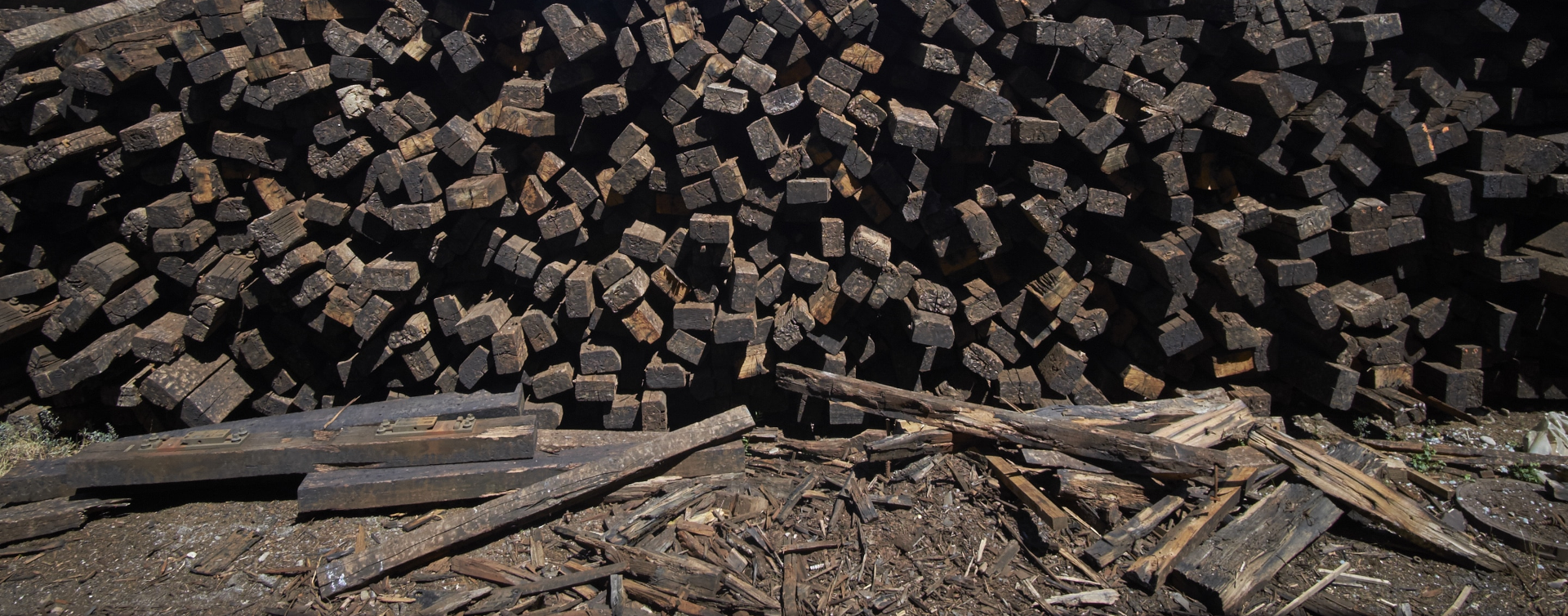
Industrial structures, installations and wood that have been impregnated with oil or have held oil for years carry the same contamination challenge as cables and soil. The MDB System extends bionrec's bacteria-based approach to fixed industrial assets, removing oil contamination without demolition or hazardous-waste disposal at scale.
A consortium built for the material mix.
The MDB System is a biotechnological approach to the in-situ and ex-situ treatment of contaminated materials and solid waste streams. Depending on the characteristics of the material mix and the pollutant profile, a tailored consortium of bacteria is selected to ensure the metabolic degradation of the micropollutants present.
Every bacterium used belongs exclusively to Risk Class 1 — zero or negligible risk to humans and the environment according to international guidelines. Decontamination therefore rests on a natural process that is completely environmentally friendly, with no chemical additives introduced into the material.
Bioaugmentation
A consortium of microorganisms, selected specifically for its biodegradation capacity, is introduced directly into the contaminated material. These microorganisms belong exclusively to Risk Class 1 under Directive 2000/54/EC on the protection of workers from risks related to exposure to biological agents at work. They are supplemented with nutrients that promote their biological activity within the material.
Biostimulation
The physical and chemical conditions inside the target material are optimised to maximise the activity of the microorganisms already present. Adjusting moisture, aeration and the carbon/nitrogen ratio while adding key nutrients accelerates the biodegradation process — no new organisms required.
From hazardous code to non-hazardous code.
Organic contaminants are degraded into non-toxic end-products — CO2, water and cell mass. Because the hazard itself is removed rather than relocated, treated material can be reclassified under the European Waste Catalogue (EWC): codes marked with an asterisk (*) give way to non-hazardous codes after treatment.
Lower regulatory restrictions
Handling, transport and storage requirements drop with the hazardous designation.
Reduced disposal fees
Non-hazardous waste streams carry a fraction of the gate fees of hazardous ones.
No long-term liability
The contamination is destroyed, not stored — there is no legacy exposure to carry.
Recovery and circular reuse
Treated material can re-enter recovery routes instead of restricted landfilling.
Four phases, applied to the structure in place.
- 01
Structure assessment
Contamination profiling across structures, containment surfaces and materials.
- 02
Bacterial application
Cultures selected for the specific hydrocarbon profile are applied directly to contaminated surfaces and residues.
- 03
In-situ biodegradation
Bacteria metabolize residual oil across repeated cycles — no demolition, no hazardous haulage.
- 04
Verification & handover
Sampling confirms the structure meets the target decontamination endpoint before reuse or decommissioning.
Fixed assets, not just fluids and soil.
Buildings
Fixed industrial buildings that have been in contact with oil for years and would otherwise require chemical cleaning or scrapping.
Containment structures
Bunds, sumps and secondary containment with long-term oil residues on the concrete or steel surface.
Decommissioned plant
Legacy industrial installations being retired, repurposed or handed over to a new operator.
MDB System, answered.
No. Structures stay in place; bacteria are applied to the contaminated surfaces where they are.